CerebroCare
Healthcare · IoT Wearable · ML · Co-Founder · 2024 · 2024
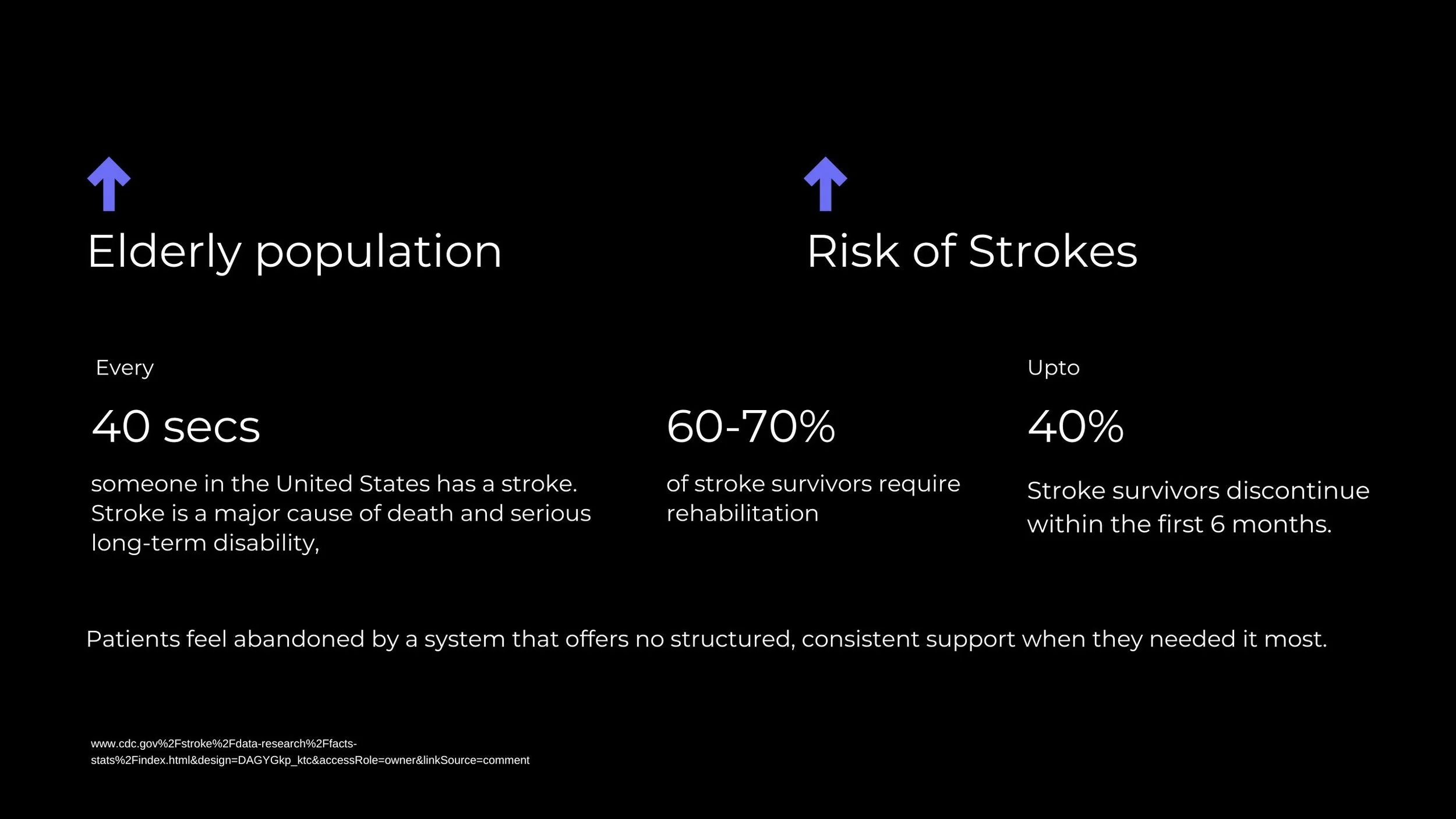
80% of stroke survivors receive inadequate post-acute rehabilitation. Not because care doesn't exist, but because the system has no visibility once patients leave hospital. Clinicians cannot monitor what they cannot see. Patients cannot improve without feedback. CerebroCare closes that loop.
I led all product and strategy work from day one. The first six weeks were entirely research: 30+ interviews with neurologists, physiotherapists, and stroke survivors across two hospitals. The consistent finding was that drop-off happens in the first two weeks at home, and no one sees it coming.
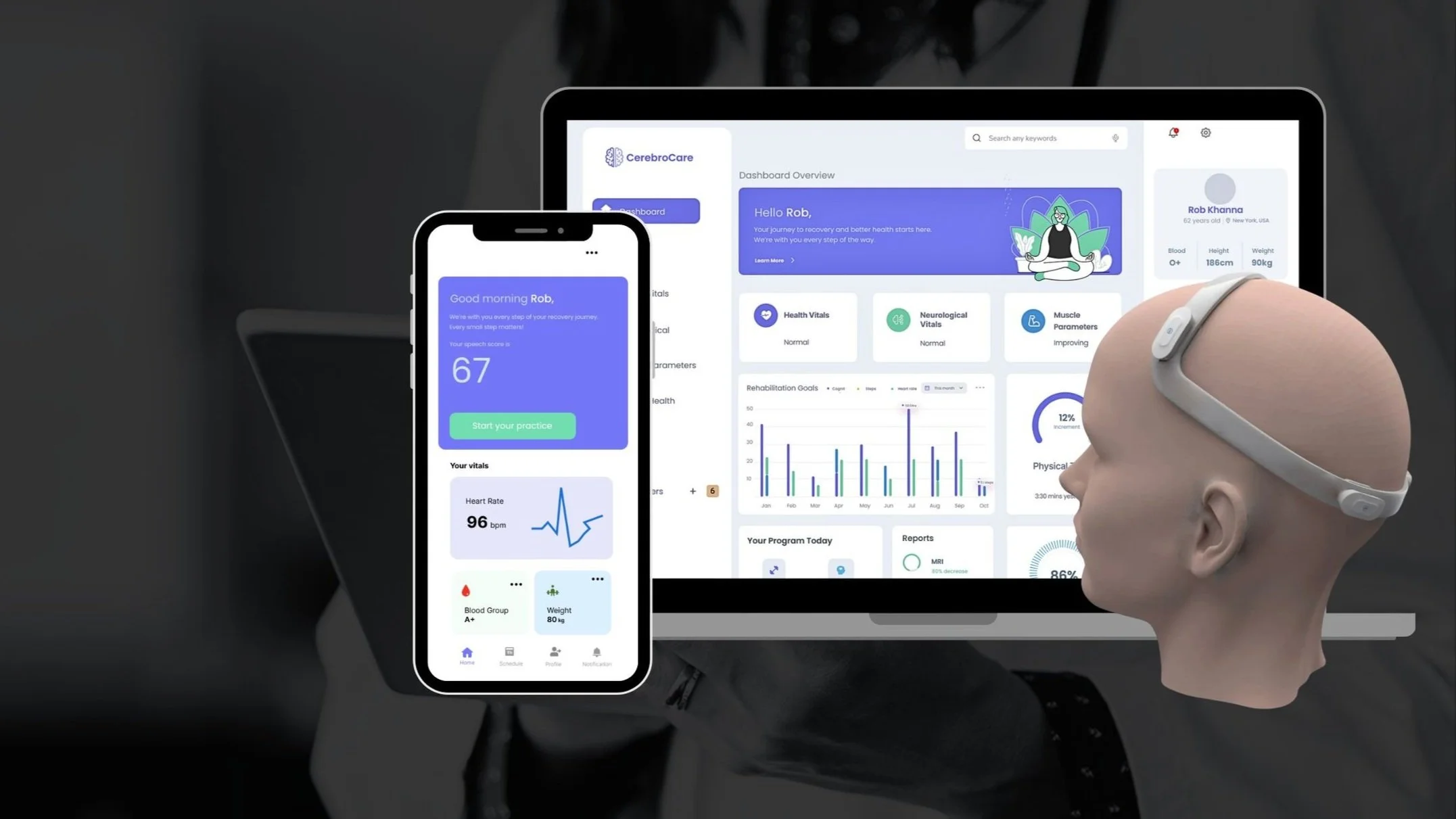
The MVP was scoped tightly around adherence tracking and remote monitoring - not therapy delivery, which was a common trap. We built ML models to flag patients whose recovery was plateauing before it became visible to clinicians.
The wearable form factor was a deliberate product decision, not a technical one. A device worn daily becomes a physical reminder to do exercises. We chose psychological continuity over pure data collection. Every alert was low-frequency by design - alert fatigue kills adherence faster than no alerts at all. All UX was validated with patients who had limited smartphone familiarity.