
Equiderm
Harvard MDE Thesis · Clinical AI · Health Equity · 2024
Where diverse skin meets intelligent care.
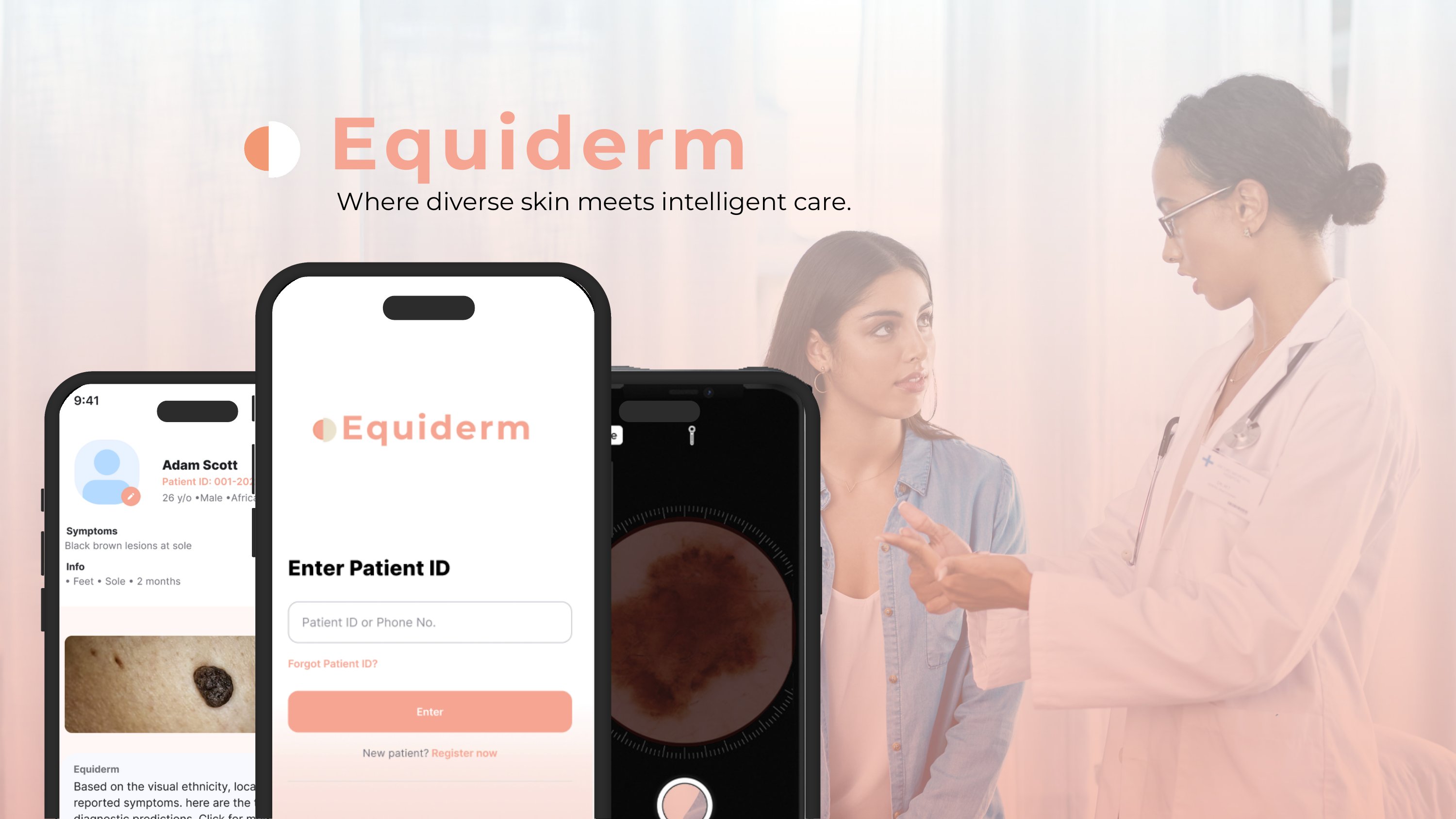
Patients of colour experience an average diagnostic delay of 4.8 years compared to 3 years for white patients. They are 2.5x more likely to be misdiagnosed with common skin conditions. Half of physicians report they were not trained to spot cancer on Black skin. The foundation of dermatology education and its training data has been built on white, fair-skinned, male bodies.
This is not a gap at the margins. Melanoma's 5-year mortality rate for patients of colour is 90%, compared to 66% for white patients. The disparity is not biological. It is systemic.
I began with 20 patient interviews in Lemuel Shattuck Hospital waiting rooms and 15 clinician interviews across Mass General Brigham and Shattuck, including Dr. Sotonye Imadojemu, Director of the Skin of Color Clinic at Harvard. The research revealed two parallel failures: patients feel unseen and dismissed, while clinicians lack confidence diagnosing unfamiliar presentations and are afraid to admit uncertainty.
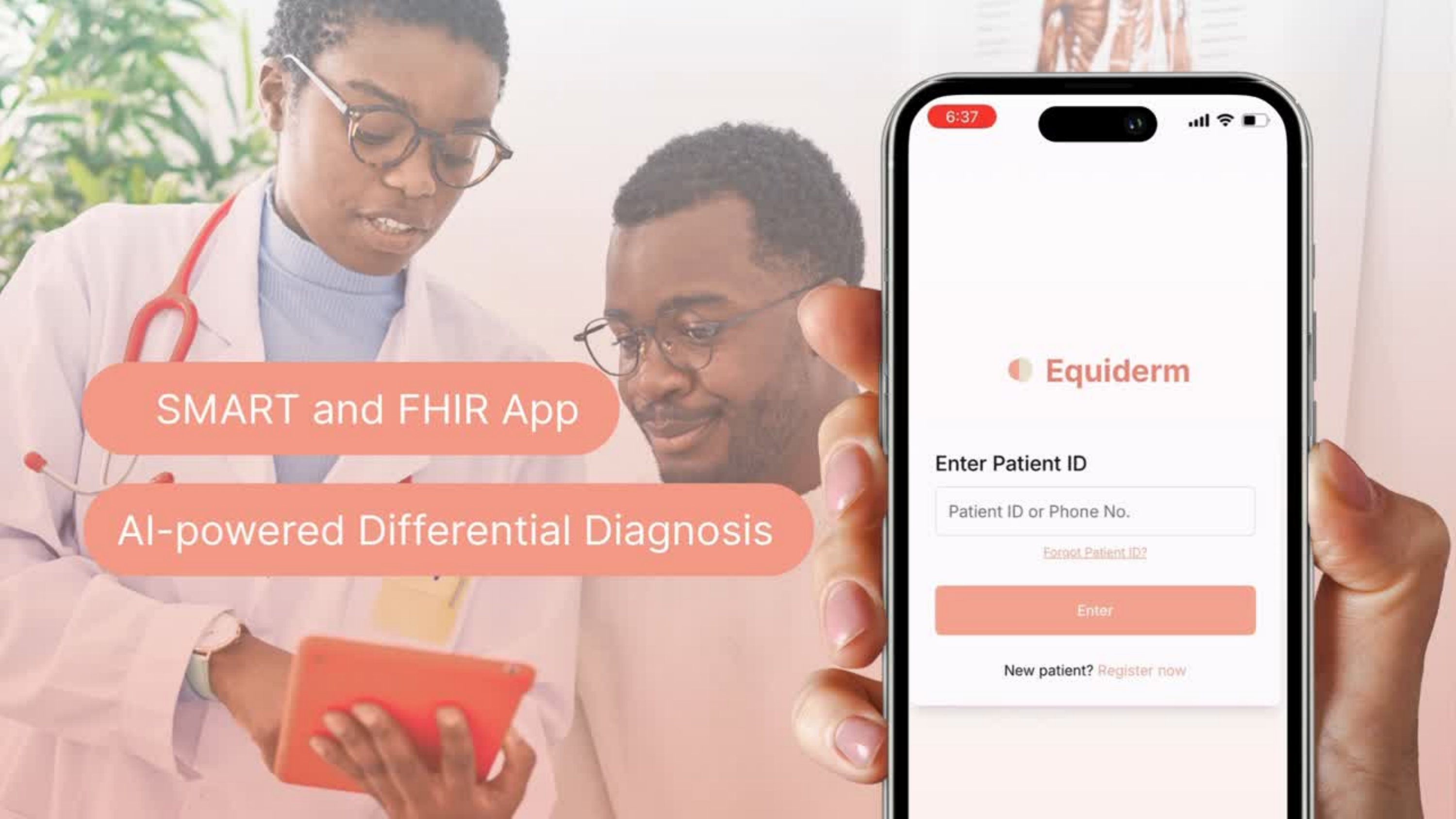
The product decision that followed from that research: build for the clinician, not the patient. Doctors do not want another platform. They need an embedded tool that fits their existing workflow and gives them a signal they can trust. Equiderm integrates via SMART and FHIR protocol directly into the EHR, so it requires no context switch.
The CV model was trained on diverse datasets covering eczema (97.3% accuracy across all skin tones), psoriasis (92%), and melanoma (83%, in active refinement with the Stanford DDI dataset team). Critically, the system surfaces diagnostic confidence scores alongside predictions — rather than presenting uncertain outputs with false authority. When confidence is lower for a given skin tone, it says so. That was a deliberate product decision, not a technical limitation.
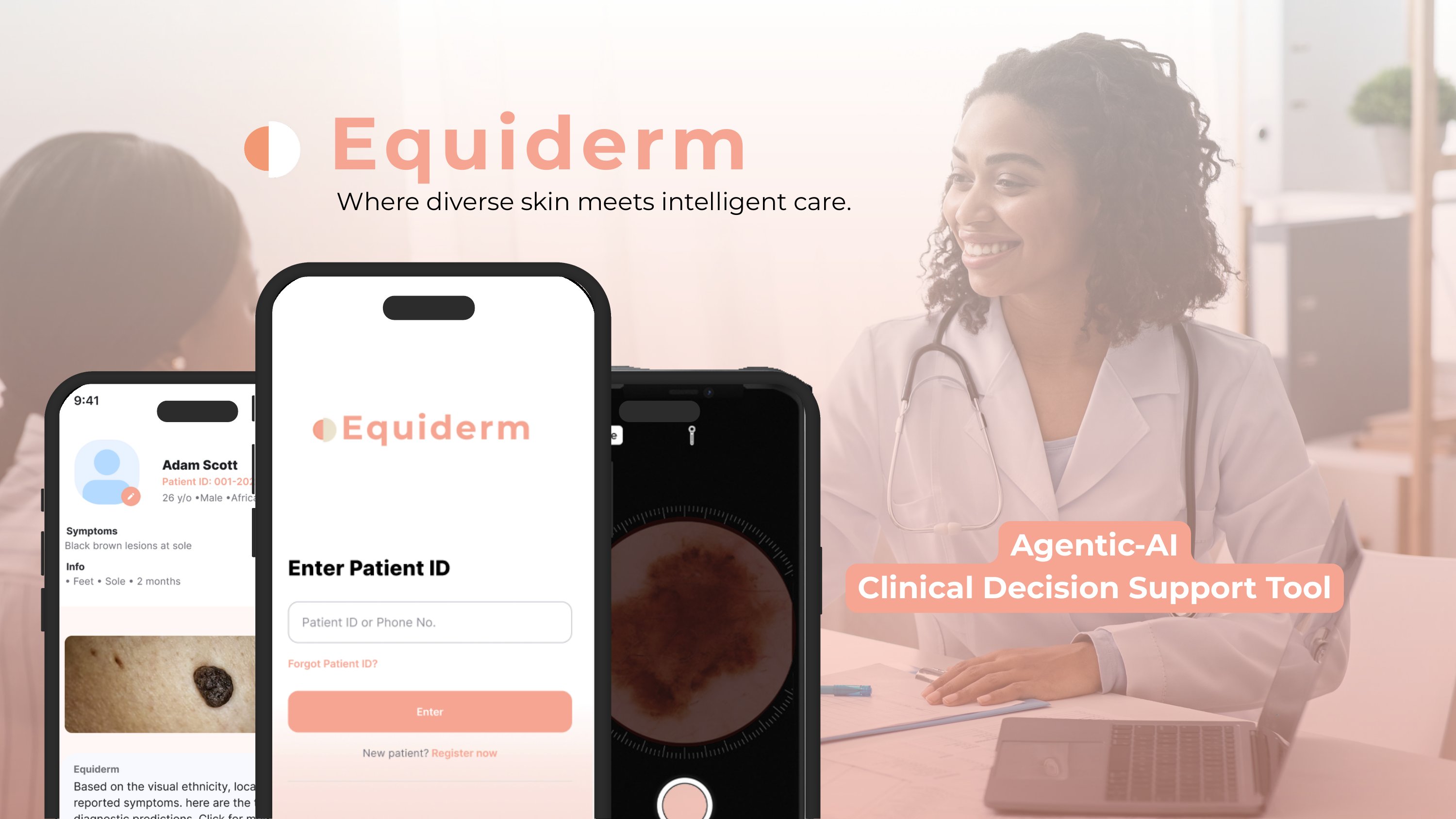
A full walkthrough of the Equiderm clinical interface.